AGRA FORT:
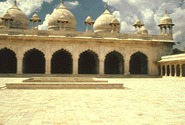
Near the gardens of the Taj Mahal stands the important 16th-century Mughal monument known as the Red Fort of Agra.
This powerful fortress of red sandstone encompasses, within its 2.5-km-long enclosure walls, the imperial city of the Mughal rulers. It comprises many fairy-tale palaces, such as the Jahangir Palace and the Khas Mahal, built by Shah Jahan; audience halls, such as the Diwan-i-Khas; and two very beautiful mosques.
AJANTA CAVES:
Ajanta caves are in state of Maharashtra of Aurangabad District in Soyagon Taluka,
Lenapur Village .
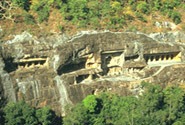
The first Buddhist cave monuments at Ajanta date from the 2nd and 1st centuries B.C. During the Gupta period (5th and 6th centuries A.D.), many more richly decorated caves were added to the original group. The paintings and sculptures of Ajanta, considered masterpieces of Buddhist religious art, have had a considerable artistic influence.
BUDDHIST MONUMENTS AT SANCHI:
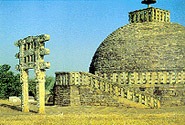
This is in the state of Madhyapradesh in India. on a hill overlooking the plain and about 40 km from Bhopal, the site of Sanchi comprises a group of Buddhist monuments (monolithic pillars, palaces, temples and monasteries) all in different states of conservation most of which date back to the 2nd and 1st centuries B.C.
It is the oldest Buddhist sanctuary in existence and was a major Buddhist centre in India until the 12th century A.D.
CHAMPANER-PAVAGADH ARCHAEOLOGICAL PARK:
This is in the state of Gujarat in panchmahal district of India.
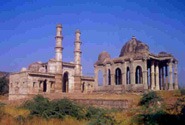
A concentration of largely unexcavated archaeological, historic and living cultural heritage properties cradled in an impressive landscape which includes prehistoric (chalcolithic) sites, a hill fortress of an early Hindu capital, and remains of the 16th century capital of the state of Gujarat. The site also includes, among other vestiges, fortifications, palaces, religious buildings, residential precincts,agricultural structures and water installations, from the 8th to the 14th centuries. The Kalikamata Temple on top of the Pavagadh Hill is considered to be an important shrine, attracting large numbers of pilgrims throughout the year. The site is the only complete and unchanged Islamic pre-Mughal city.
CHHATRAPATI SHIVAJI TERMINUS (formerly Victoria Terminus):
This place is in Mumbai of state of Maharashtra in India.
The Chhatrapati Shivaji Terminus, formerly known as Victoria Terminus in Mumbai, is an outstanding example of Victorian Gothic Revival architecture in India, blended with themes deriving from Indian traditional architecture. The building, designed by the British architect F.W. Stevens, became the symbol of Bombay as the ‘Gothic City’ and the major international mercantile port of India. The terminal was built over ten years starting in 1878 according to a High Victorian Gothic design based on late medieval Italian models. Its remarkable stone dome, turrets, pointed arches, and eccentric ground plan are close to traditional Indian palace architecture. It is an outstanding example of the meeting of two cultures as British architects worked with Indian craftsmen to include Indian architectural tradition and idioms forging a new style unique to Bombay.
Chhatrapati Shivaji Terminus of Mumbai (formerly Bombay) exhibits an important interchange of influences from Victorian Italianate Gothic Revival architecture, and from Indian traditional buildings. It became a symbol for Mumbai as a major mercantile port city on the Indian Subcontinent within the British Commonwealth.
CHURCHES AND CONVENTS OF GOA:
These are in the state of Goa in India.
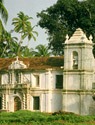
The churches and convents of Goa, the former capital of the Portuguese Indies – particularly the Church of Bom Jesus, which contains the tomb of St Francis-Xavier – illustrate the evangelization of Asia. These monuments were influential in spreading forms of Manueline, Mannerist and Baroque art in all the countries of Asia where missions were established.
ELEPHANTA CAVES IN KOLABA:
These caves are in the state of Maharashtra in district of Kolaba ( an island of Elephants).
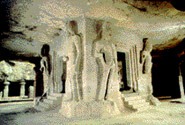
The ‘City of Caves’, on an island in the Sea of Oman close to Bombay, contains a collection of rock art linked to the cult of Shiva. Here, Indian art has found one of its most perfect expressions, particularly the huge high reliefs in the main cave.
ELLORA CAVES:
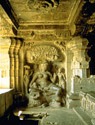
These are in state of Maharashtra in Aurangabad District, Khulatabad Taluk , Verul Village in India.
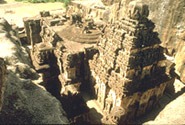
These 34 monasteries and temples, extending over more than 2 km, were dug side by side in the wall of a high basalt cliff, not far from Aurangabad, in Maharashtra. Ellora, with its uninterrupted sequence of monuments dating from A.D. 600 to 1000, brings the civilization of ancient India to life. Not only is the Ellora complex a unique artistic creation and a technological exploit but, with its sanctuaries devoted to Buddhism, Hinduism and Jainism, it illustrates the spirit of tolerance that was characteristic of ancient India.
FATEHPUR SIKRI:
This is in the state of Uttar pradesh in Agra district.
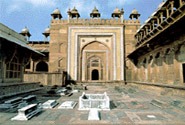
This is Built during the second half of the 16th century by the Emperor Akbar, Fatehpur Sikri (the City of Victory) was the capital of the Mughal Empire for only some 10 years. The complex of monuments and temples, all in a uniform architectural style, includes one of the largest mosques in India, the Jama Masjid.
GREAT LIVING CHOLA TEMPLES:
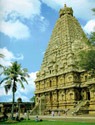
Two great Chola Temples of the 11th and 12th centuries have been added to the 11th century Brihadisvara temple of Thanjavur, inscribed in 1987. The Great Living Chola Temples were built by kings of the Chola Empire, which stretched over all of South India and the neighbouring islands. The site now includes the three great 11th and 12th century Chola Temples: the Brihadisvara temple of Thanjavur, the Temple of Gangaikondacholisvaram and the Airavatesvara temple at Darasuram.
The Temple of Gangaikondacholisvaram, built by Rajendra I, was completed in 1035. Its 53-m vimana (sanctum tower) has recessed corners and a graceful upward curving movement, contrasting with the straight and severe tower at Thanjavur. It has six pairs of massive, monolithic dvarapalas statues guarding the entrances and bronzes of remarkable beauty inside. The Airavatesvara temple complex, built by Rajaraja II, at Darasuram features a 24-m vimana and a stone image of Shiva. The temples testify to the Cholas brilliant achievements in architecture, sculpture, painting, and bronze casting.
The three Great Chola Temples are an exceptional and the most outstanding testimony to the development of the architecture of the Chola Empire and the Tamil civilisation in Southern India.
The Brihadisvara Temple at Thanjavur became the first great example of the Chola temples, followed by a development of which the other two properties also bear witness
GROUP OF MONUMENTS AT HAMPI:
These are in the district of Bellary of Karnataka State in India.
The austere, grandiose site of Hampi was the last capital of the last great Hindu Kingdom of Vijayanagar. Its fabulously rich princes built Dravidian temples and palaces which won the admiration of travellers between the 14th and 16th centuries. Conquered by the Deccan Muslim confederacy in 1565, the city was pillaged over a period of six months before being abandoned
GROUP OF MONUMENTS AT MAHABALIPURAM:
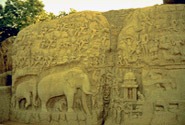
These are in the State of Tamilnadu in Chingleput District of India.
GROUP OF MONUMENTS AT PATTADAKAL:
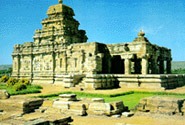
These are in the state of Karnataka in Bijapur District Badami Taluk in India.
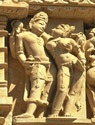
KHAJURAHO GROUP OF MONUMENTS IN THE STATE OF MADHYA PRADESH
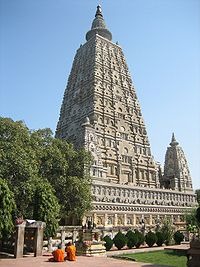
MAHOBODHI TEMPLE IN BUDDHA GAYA
This temple is in the state of Bihar in India.
The Mahabodhi Temple, one of the few surviving examples of early brick structures in India, has had significant influence in the development of architecture over the centuries. Criterion (iii) The site of the Mahabodhi Temple provides exceptional records for the events associated with the life of Buddha and subsequent worship, particularly since Emperor Asoka built the first temple, the balustrades, and the memorial column.
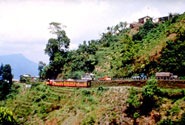
MOUNTAIN RAILWAYS IN INDIA:
This we can see in the state of West bengal and Tamilnadu of India.
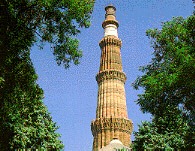
QUTB MINAR ITS MONUMENTS IN DELHI:
ROCK SHELTERS AT BHIMBETKA OF MADHYA PRADESH:
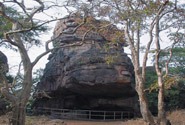
The Rock Shelters of Bhimbetka are in the foothills of the Vindhyan Mountains on the southern edge of the central Indian plateau. Within massive sandstone outcrops, above comparatively dense forest, are five clusters of natural rock shelters, displaying paintings that appear to date from the Mesolithic Period right through to the historical period. The cultural traditions of the inhabitants of the twenty-one villages adjacent to the site bear a strong resemblance to those represented in the rock paintings.
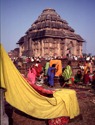
SUN TEMPLE kONARK IN THE STATE OF ORISSA:
This place in the State of Orissa in Puri District of India.
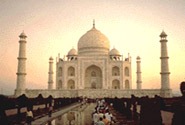
TAJ MAHAL:
This is the place which is find in the state of Uttar pradesh in Agra district of India. In short Taj mahal is the must see tourist spot of India.
Top Five Summer Weekend Gateways from Bengaluru for you in this article. We have also tried to update approximate budget…
Kedarnath is open for pilgrims in month of May this year and millions of people from all around the world…
This article covers Top Summer Weekend Gateways in India. These are randomly picked and detailed Itenary for these weekend trips…
The Char Dham Yatra is a pilgrimage circuit in the Indian state of Uttarakhand, which encompasses four sacred sites: Yamunotri,…
Are you on a travel trip to India? Looking for medicines or medical tests online. You should definitely look into…
Domestic Flights have predominantly increased over the period of time in India. Most of Tier 1 and Tier 2 cities…
This website uses cookies.

Leave a Comment